ARLL GROUP | CASE STUDY
3.92 Million Units Recovered from AMZ FBA Liquidation
How ARLL Group processed one of the largest mixed-category FBA liquidation programmes in Europe — recovering €3.29M from non-branded, low-value returns over 26 months.
3.92MUnits Processed | €3.29MTotal Recovery
68.6%Avg Recovery Rate | 126.5%Peak Recovery (2022)
ASAP Reverse Logistics powered by ARLL Group | asapreverse.com
The Challenge
A major global e-commerce platform needed a liquidation partner capable of processing high-volume, mixed-category FBA (Fulfilled by AMZ) inventory across the UK and EU. The goods were predominantly low-value, non-branded customer returns — the hardest category to recover value from, because individual item margins are thin and logistics costs can easily exceed product value.
Key constraints:
• Massive, irregular volume: Millions of units across unpredictable category mixes, arriving in continuous waves.
• Low unit value: Non-branded FBA goods where traditional resellers see no margin — logistics costs often exceed product value.
• Speed requirement: Inventory needed to clear continuously. No accumulation, no warehousing backlogs.
• Multi-category complexity: Furniture, garden, tools, toys, clothing, appliances, home & kitchen — each needing different buyer profiles and resale channels.
The Approach
ARLL operated on weekly processing cycles — not batch-and-hold. Every pallet was inspected, graded (A/B/C/D), grouped into buyer-matched lots, and sold through a pan-European B2B network. The process followed a continuous flow model:
1 | 2 | 3 | 4 | 5
Intake | Grading | Lot Building | B2B Sale | Ship & Report
Pallets received and logged | A/B/C/D quality assessment | Matched to buyer demand | 65K+ buyer network | Delivery + analytics
Over the 26-month programme, this cycle produced 849 distinct lots. High-grade items (A/B) were routed to outlet retailers and B2C resellers. Lower-grade stock (C/D) went to market traders, pallet buyers, and recycling partners. No inventory sat idle — the buyer network’s depth of 65,000+ contacts meant every lot had a channel.
Results
Consistent high recovery on the hardest inventory category in e-commerce liquidation:
Metric | Result
Total units processed | 3.92 million
Total lots created & sold | 849
Gross RRP value | €7.63M
Total recovery value | €3.29M
Average recovery rate | 68.6% of RRP
Peak recovery rate (2022) | 126.5% of RRP
Programme duration | 26 months
Categories covered | All except phones & laptops
Why did recovery hit 126.5% in 2022?During peak demand periods, B2B buyer competition drove sale prices above the recorded RRP for certain lots — particularly in categories where supply was constrained. When a deep, active buyer network competes for limited stock, recovery rates can exceed the original retail valuation. This is the structural advantage of network depth over warehouse capacity.
Key Takeaways
Volume is a system problem, not a storage problem
Processing 3.92M units required operational cadence — grading speed, lot design discipline, and a buyer network that could absorb output weekly. Warehousing alone doesn’t solve liquidation; throughput velocity does.
Non-branded, low-value goods CAN recover significant value
The common assumption is that non-branded FBA returns are near-worthless. This programme proved otherwise: 68.6% average recovery, with peaks above 100% — if the operator has the right buyer network depth.
The buyer network is the real asset
Recovery rates are a function of how many qualified buyers compete for each lot. ARLL’s 65,000+ B2B buyer database — built over 16 years — is what made these numbers possible on non-branded goods. Branded inventory in the same system would yield materially higher recovery.
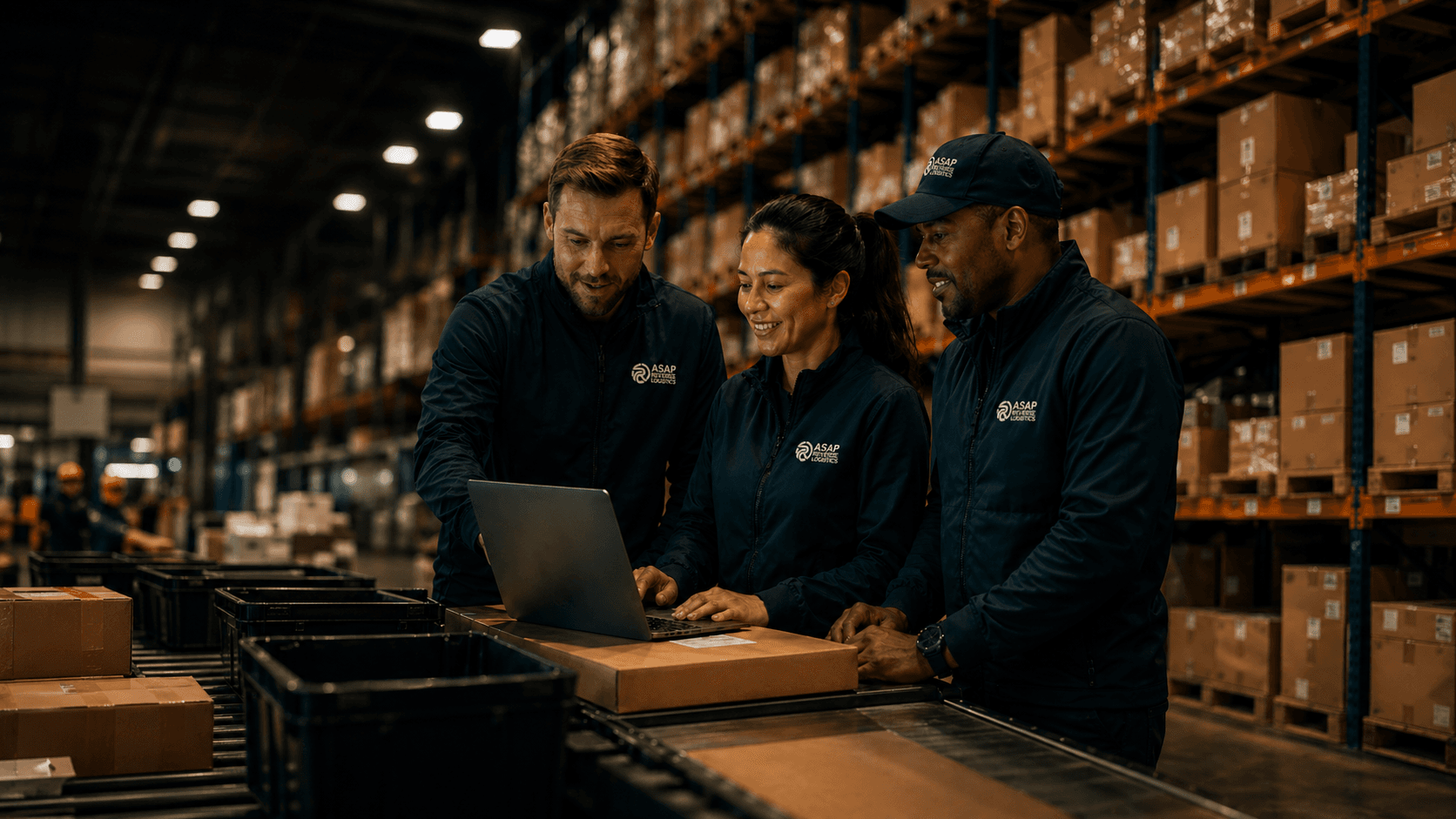
ARLL Group operations, now powering ASAP Reverse Logistics.This case study reflects operations conducted by ARLL Group. The operational methodology, grading systems, and buyer network developed during this programme now power ASAP Reverse’s returns recovery platform, Returnal OS.