What Really Happens to Your Amazon Returns — and How to Recover 30–40% Instead of 1–7%
Most Amazon sellers track revenue. Very few track what happens to a product after a customer sends it back.
That blind spot is expensive. Online return rates now sit at roughly one in five orders — around 20% across e-commerce, climbing to 30–40% in apparel and 8–15% in electronics. And the cost of handling a single return runs anywhere from 20% to 65% of the item's original value once you add up shipping, inspection, repackaging and warehouse space.
For an FBA seller, the returned unit is not a minor line item. It is one of the largest, quietest leaks in the entire P&L. This article breaks down exactly where that money goes — and shows the route that turns a 1–7% recovery into 30–40% of RRP.
The true cost of an Amazon return: a unit that leaks twice
A returned unit doesn't cost you once. It costs you on the way in, and again on the way out.
1. The return processing fee (on the way in)
Since mid-2024, Amazon charges a returns processing fee on FBA products with high return rates in their category (apparel and shoes have their own scheme). The fee is tiered by size and weight, and for many categories it lands in the 2.9%–12.8% range per returned unit. If your return rate sits above your category benchmark over a trailing three-month window, every unit over that threshold is surcharged.
2. Storage and aged-inventory surcharges (while it sits)
When a return comes back, Amazon inspects it. If it's graded "unfulfillable" — opened, used, customer-damaged, missing packaging — it doesn't go back on sale. It sits. And while it sits, it accrues monthly storage fees and aged-inventory surcharges that escalate the longer it stays (notably past 181 days, then 12 and 15+ months).
3. The liquidation trap (on the way out)
Eventually you have to clear that unsellable unit. Your realistic options are a disposal fee (a straight cost), a removal order back to yourself (another fee, plus you still have the problem), or FBA Liquidations.
Here's the number most sellers have never actually calculated. Through FBA Liquidations, you typically recover 5–10% of an item's average selling price as a gross figure. Then Amazon deducts a processing fee and a 15% referral fee on top, and pays you the net 60–90 days later. In Amazon's own published example, a $20 phone case nets around $1.
Net-net, recovery often lands between 1% and 7% of value. You are effectively paying to lose your own stock.
Revenue is vanity. Recovered margin is reality. And the returned-unit recovery rate is the single most under-measured number in most FBA businesses.
What 1–7% recovery costs in real money
Take a seller doing £100,000 in revenue with a 15% return rate.
Stage | Amount
Returned merchandise (15% of revenue) | ~£15,000 RRP
Share graded unfulfillable (~40%) | ~£6,000 RRP
Recovered via FBA Liquidations (net 1–7%) | £60 – £420
Recovered via a dedicated recovery partner (30–40% RRP) | £1,800 – £2,400
Same stock. Same returns. A difference of well over a thousand pounds — on a single £100k seller, in a single period. Multiply across a real catalogue and the gap becomes the difference between a thin year and a strong one.
The alternative: route your returns into a 5R recovery system
Instead of feeding unsellable units into a fire-sale auction that pays pennies, you route them into a structured recovery process built to maximise value through multi-channel liquidation — not a single wholesale dump.
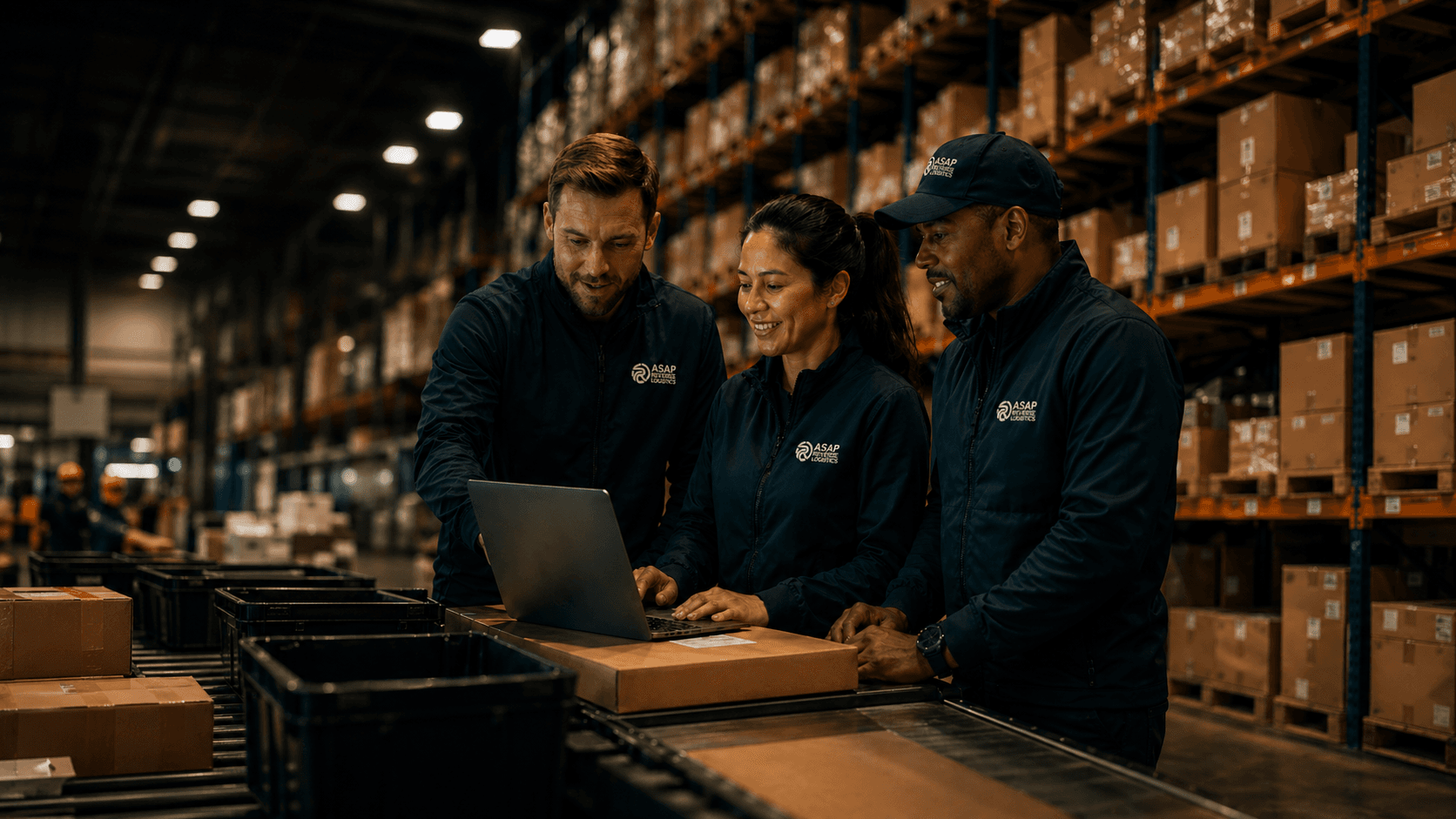
This is the core of how ASAP Reverse Logistics works with sellers.
How it works
FBM sellers redirect the return address to our processing hub. Returns arrive per unit, in real time.
FBA sellers set up automated removal orders to us. Unsellable stock flows to us in batches instead of being liquidated for 5% or destroyed.
We grade, photograph, manifest, list and sell every unit across multiple recovery channels — B2B wholesale, our recommerce storefronts, and verified buyer networks — to capture the highest realistic price for each item, not the lowest.
You're paid on a transparent revenue share against real recovered value, with full visibility into every unit.
What you control — and what it costs
We've kept the terms deliberately simple, because friction is what stops sellers from acting:
You cover inbound freight. You ship the returns to us; we handle everything after they land — grading, listing, sale, payout.
No minimum volume. One pallet or one truck, the deal is the same. You don't need to be an eight-figure brand to plug in.
Recovery target of 30–40% of RRP on returned and mixed-grade stock — calibrated honestly to the condition mix that returns actually arrive in, not an inflated headline number.
Real-time visibility through Returnal OS
This is where it stops being a service and becomes infrastructure. Every unit you send is tracked inside Returnal OS, our recovery platform:
QR-coded at intake, so each unit is individually traceable
Live manifests you can see, so you always know what's landed and what's sold
Automated payouts, so the revenue share isn't a black box you have to chase
Auto price management and multi-channel listing, so units sell rather than stagnate
You stop flying blind on the back half of your business. You watch the recovery happen in real time.
30–40% vs 1–7%: why the number matters more than the fee
The instinct when margins tighten is to fight the fees — renegotiate, optimise packaging, trim PPC. All worth doing. But the fees on the way in are largely fixed by Amazon. The recovery rate on the way out is the lever you fully control — and it's the one almost nobody pulls.
We're not theorising. ASAP, powered by ARLL Group, has recovered value on 3.9M+ units representing over €7.6M of RRP across returned and overstock inventory. The infrastructure, the buyer networks and the platform already exist. Sending us your returns plugs into a system that's been running at scale, not a pilot.
It's not only margin — it's compliance and waste
There's a second reason this matters, and it's getting harder to ignore.
Returns are an environmental problem at industrial scale: an estimated 9.5 billion pounds of returned goods end up in landfill every year in the US alone. In the EU, the direction of regulation — the ESPR (Ecodesign for Sustainable Products Regulation) and tightening producer-responsibility rules — is pushing brands away from destroying unsold and returned stock and toward documented reuse and recovery. As one illustrative category, the EU discards around 10 million tonnes of furniture a year, with 80–90% going to landfill or incineration — exactly the kind of avoidable waste that structured recovery and extended producer responsibility are designed to eliminate.
Routing returns into a recovery system isn't just better economics. It's an auditable, defensible answer to "what did you do with your unsold stock?" — a question regulators and acquirers increasingly ask.
Who this is for
This works best if you:
Sell on Amazon (FBA or FBM) and carry a recurring stream of returns or unsellable inventory
Currently liquidate, dispose of, or simply write off returned stock
Want recovered revenue and a paper trail you can stand behind
Would rather see 30–40% than 5% — and would rather see it live than wait 90 days for a black-box payout
Getting started
There's no minimum volume and no long-term lock-in to begin. The fastest way to see whether this works for your catalogue is to run your own ASINs through it:
Send us a sample of your returned or unsellable stock (you cover inbound freight).
We grade, list and recover it across channels, fully tracked in Returnal OS.
You see the real recovery per unit — and decide from there.
To restore the value others have given up on — so that nothing, and no one, is wasted.
That's the mission. The returns sitting unsellable in your Amazon account are the easiest place to start living it.
Frequently asked questions
How much do you actually recover from Amazon FBA Liquidations?
Typically 5–10% of an item's average selling price as a gross figure, before Amazon deducts a processing fee and a 15% referral fee. Net recovery commonly lands between 1% and 7%, paid 60–90 days after the order.
What happens to unsellable Amazon returns?
Returns graded "unfulfillable" can't go back on sale. They accrue storage and aged-inventory surcharges until you dispose of them, pay to have them removed back to you, or liquidate them for a small recovery. A dedicated recovery partner is the route that captures meaningful value instead.
Can I send my Amazon returns to a third-party recovery partner?
Yes. FBM sellers can set the return address directly to a recovery hub. FBA sellers route unsellable stock via automated removal orders. Both then flow into a structured grading and multi-channel sale process.
Is there a minimum volume?
No. One pallet or one truck — the terms are the same.
Who pays for shipping?
The seller covers inbound freight to the recovery hub. Grading, listing, sale and payout are handled after the stock lands.
How is recovery paid?
On a transparent revenue share against real recovered value, with automated payouts and per-unit visibility inside Returnal OS — not a delayed lump sum.
What recovery rate can I expect?
For returned and mixed-grade stock, the realistic target is 30–40% of RRP, calibrated to the condition the goods arrive in.
ASAP Reverse Logistics, powered by ARLL Group. We maximise recovery through multi-channel liquidation.